
4.7 – Additional Resources: NRC Publications
NRC Publications Now, not everything that could be of value to the Building Official makes it into the body of the Building Code; sure, we’ve got our rule book, we’ve got our list of required plans and drawings, we’ve even got our dictionary in Division A – but there is an incredible amount of behind-the-scenes work, studies, reports, and research, which form the foundation of each Code, and changes proposed from version to version, year to year. If you were to try and cram all of it into the Volumes of the Code, your desk might need to be made of much sturdier stuff, just to handle the weight alone!

Think about a movie you love; when you watch the film, you understand the story, who the characters are, what they do, and how the whole thing comes together from start to finish. You follow along the plot, the dialogue, see the tropes and cliches, maybe even spot some of the props and comments early in the film that hint at the twists and conclusion that come at the end of the film.
But then think about subtle parts of that process – like the costume design, or the film score, the casting, maybe even things like Easter-Eggs that were snuck into the film for the keen eyed or curious. Most of these never so much as get a nod during the film – but still add in a big way to the overall success of the film for the viewer.
In the same way, the National Research Council (NRC) hosts a massive archive of publications – papers, research, support documents and guides – to help users, designers, and Building Officials, better understand why the Code is the way it is – and to help explain how the written text might really look, through sample assemblies and details, to outline how building components may actually interact. As we’ve said before, the context (the reason) of why a rule exists in the Code is a very valuable tool for helping us to better understand it, but also, to help us enforce it – so, having a whole series of additional publications to support that need, is a great resource!
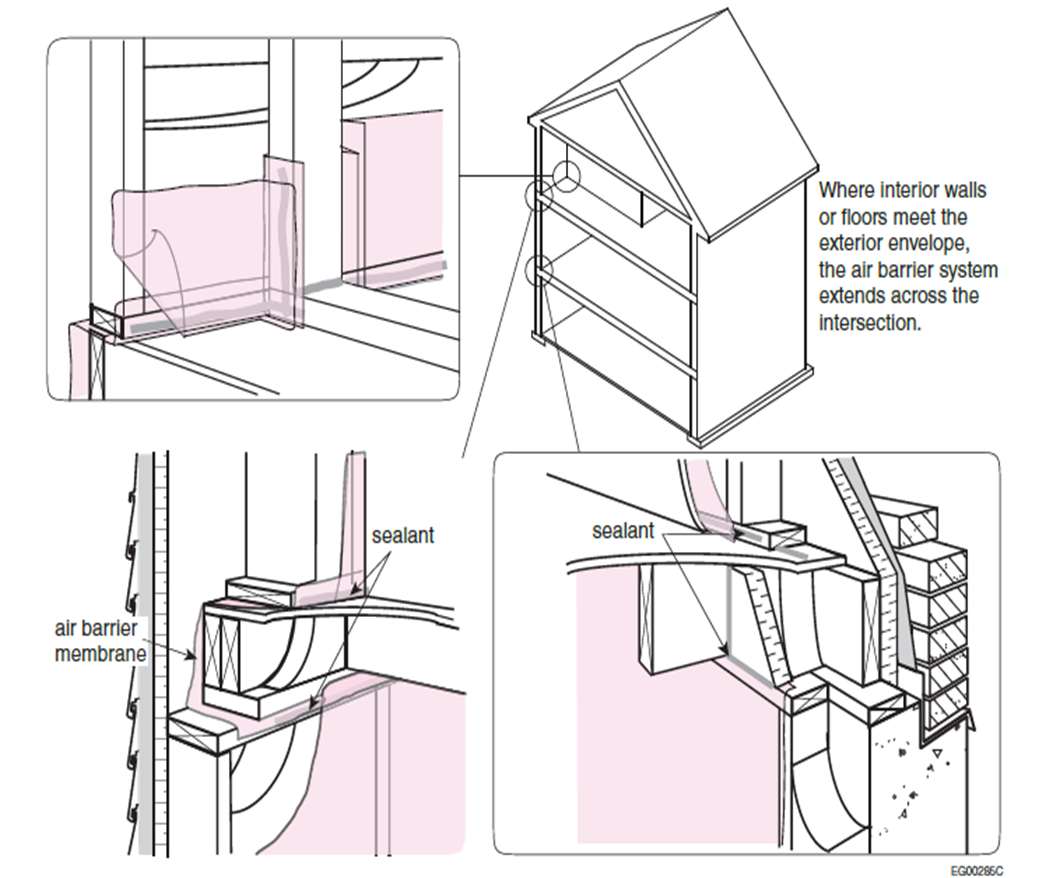
One of the core, and most valuable items on this list, are the Illustrated User’s Guides; a support document that not only repeats the page by page text of the Code in more plain language, but also provides handy images to better explain how meeting the Code can be done. There are many cases in the Code where, when the requirement is to install a material, the “how” is really only a checklist, rather than an explanation. Let’s take an Air barrier as an example – which the Code says largely just needs to be “continuous;” that’s easy enough to understand when we read it, but what does it mean when we’re looking at a set of plans, or, on site for an Inspection? The User’s Guide makes things clearer by including a number of sections, details, and drawings showing just how to do just that.
In fact, it’s not just assemblies that the Illustrated User’s Guide covers – examples of things like mezzanines (which we’ll discuss later), where things like fire separations need to be placed, how egress from a building works – all of these can be better described in the User’s Guide; where it’s not an adopted piece of legislation (like our Code), it doesn’t need to read like a law – it can be written in plain-language, so that it’s easier to navigate, digest, and follow along for the average user (instead of having to be an architect, engineer, or Official to really get the gist of it).
What if you’ve got a design where they’re asking to use Alternative Compliance to cover the travel distance requirement in a building, based on the time it takes to exit, instead of the distance? It might be pretty hard to review that design, if you didn’t understand how the Code landed on those values. But you’re in luck! The NRC archives also carry historical studies and research papers on what factors led to a rule, value, or other intent of the Code to be there. Knowing how a value was chosen, or what testing helped a requirement come to be, makes it a great deal easier to decide if it does, in fact, do a better job than the Code minimum!
And it’s not just elements like travel distance; there are studies on Firewalls, dead end corridors, how exit choice is made by occupants, white papers on different materials and how they function in building assemblies. There are hundreds and hundreds of documents which can be of value to the Official – not because they form part of the enforceable Code – but again, to provide context.
All of this helps form the understanding – by both the Official, and designers alike – of the why behind the Code’s where and how; whether we’re talking about the contents of the NRC publications archive, the User’s Guides, Commentaries, or other published documentation – the intent is the same; to provide additional education resources to help support the published Code themselves.
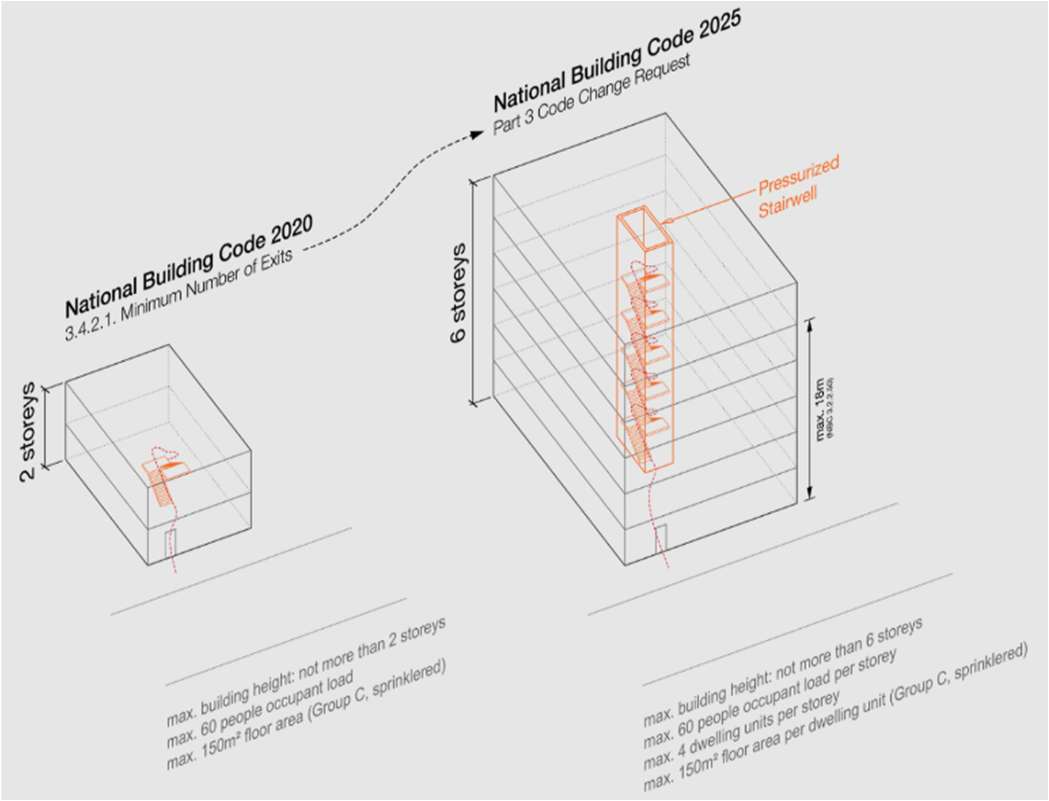
While not something covered by this course, NRC routinely receives requests for provisions – changes to be made, added, or revisions within the Code; when reviewing these proposals, understanding the reasons behind what existing provisions are, can be very useful in evaluating whether or not a new proposed rule makes sense. It’s worth noting just how many provisions are reviewed with each Code cycle – it can be hundreds! Everything from minor language changes to an existing rule, or adding complete new Sections which cover something not previously addressed by the Code – like the adoption of Mass-Timber as a building element in the 2020 Code, increasing the height permitted by combustible buildings for some uses.