
2.9 – Building Different: When Performance Allows for Materials Outside the Code
Allows for Materials Outside the Code In all likelihood – you’ve probably picked up a thing or two from a hardware or building-supply store before – maybe some screws to hang some pictures, maybe a little paint and brushes, some plugs or switches to swap out with ones you already own – or even some drywall and lumber for a minor renovation. But how much thought did you give to those materials? Other than figuring out what you might have needed for the project – you probably assumed that – whatever you were picking up – it shouldn’t have any issue meeting the Code, right?
You might be surprised to know that not every material on a store shelf is included in the Code – or even meets its Prescriptive requirements. Now – before you panic and boycott a major retailer, let’s examine that claim a little bit further.
Some materials – like dimension lumber – largely used for framing, are outlined in the Code; we know that these items have specific grading standards they need to meet, can be used in a number of structural applications – and have clear dimensions, spans, and loads assigned to them for compliance. And because dimensional lumber is so common and has been around so long – it’s not surprising that it is as routinely identified in Code. The same can be said for drywall, plywood, and masonry products.
But what about other products? If you’ve ever driven past a new home under construction – you’ve probably seen house-wrap – it goes by a number of brand names – but what you probably don’t know is that house-wrap isn’t included in the Code. The Code compliant solution for protection of sheathing is just asphalt-impregnated paper, or tar-paper as you might have heard it called. But, realistically, no one uses that anymore – so, why is house-wrap the accepted solution?
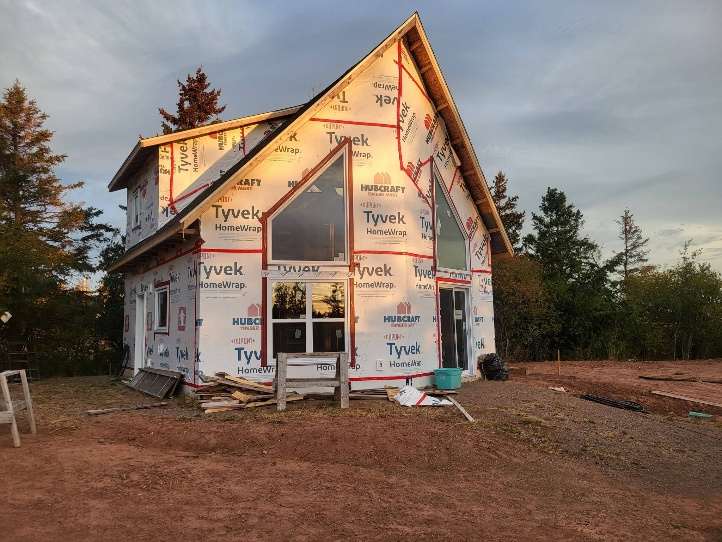
As we’ve talked about before – the Code moves pretty slowly and largely concerns itself with the minimum standard for materials used in buildings or construction. But new products hit the market every day – so, how do they become acceptable for construction? This is where third-party acceptance testing comes in – which is just another way of saying alternative – or Performance compliance. Organizations, such as the Canadian Construction Materials Council – or CCMC – conduct routine testing on products, and materials, and determine what application – if any – they can be used in as it relates to the Code.
When confirming if a product you’re seeing on a shelf, or on a job site meets the intent of the Code, if it’s one you’re unfamiliar with – you can always find their report number on the packaging, and on their website. Be sure to read it – as it will tell you how, and what it can be used for to meet the Code.