
3.4 – What do the Regulations Provide?
We touched on this briefly in the last section, but in adopting the Building Code, there is a lot of control and functionality that the Regulations provide us. As we noted when talking about the Act – the function of the Regulations (at least in this part) is to identify not just the version of a Code being adopted – but to identify any changes or amendments which are reflected in that adoption. This is covered in Part 3 of the Regulations – and its importance cannot be understated.
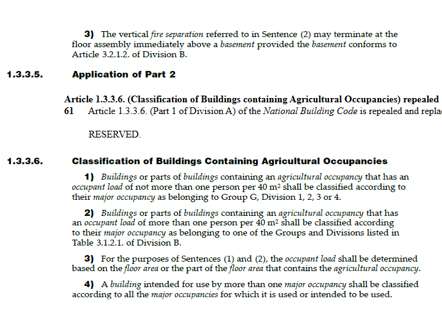
Sections of the adopted Code can be Repealed; meaning, they can be ignored or left out of the adoption process – just deleted from page! This can be particularly handy, if an entire portion of the Code would constitute a major change or problem for the Province – for example, the adoption of the Farm Code – which has otherwise not changed since 1995.
When the Province reviewed the requirements for the Farm Code, now known as Part 2 as adopted by the 2020 National Building Code, many of the rules around the protection of Farm Buildings, fire protection, sprinkler systems, and how electrical systems needed to be protected, they expected a lot of complications for the existing industry. Rather than put pressure on private farms and agricultural companies, to bring existing buildings into compliance – it made more sense to hold back those elements for a later adoption.
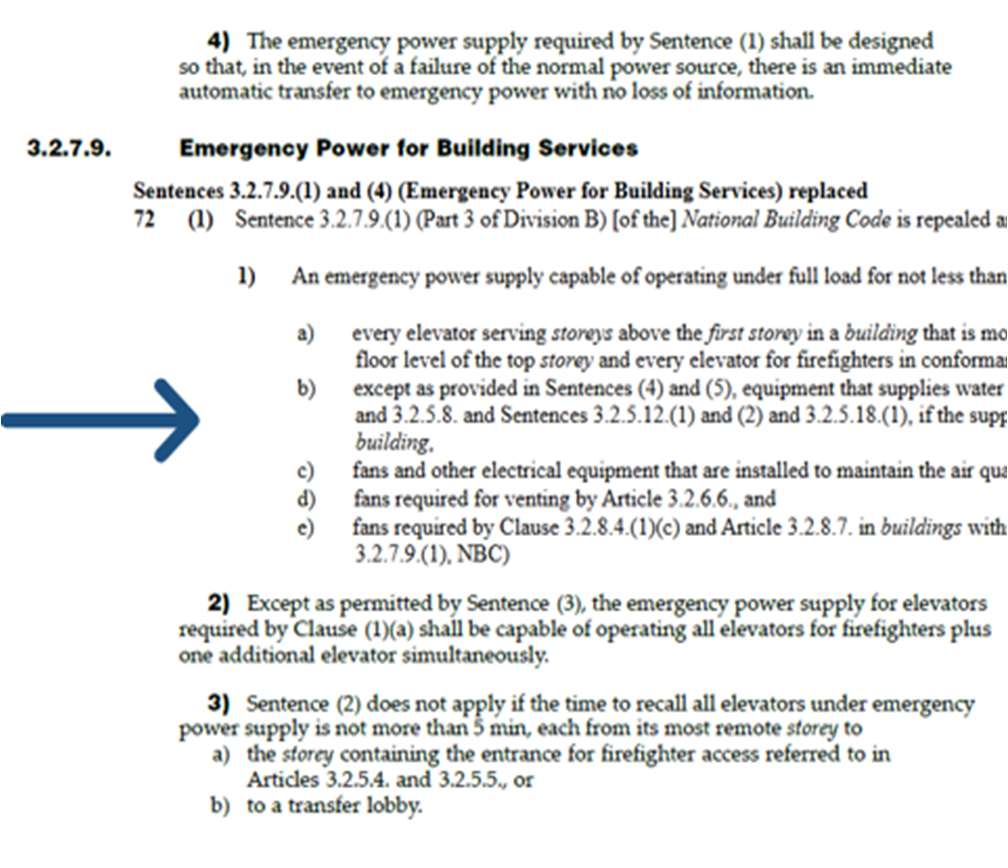
It can also be very useful if a specific element of the Code is expected to change, or an exemption exists that the Province does not wish to permit – in our Province’s case, the allowance of exhaust-only ventilation in houses. Repealing, and leaving that element “Reserved” for future adjustment, gives the Regulations the flexibility to hold back elements as it needs to. Where the Regulations get revised far more frequently than the Code does (or are able to be, by the Province), having a placeholder for an item that might be worth changing, or keeping delayed for the time being is certainly a valuable tool!
Sections of the adopted Code can also be Replaced – this functions somewhat similarly to Repealing, but instead of leaving it out – a new element is included in its place – basically just a swap out from one rule, to another. This is especially useful, when a minor change to the way a Sentence is written is required, or, if something added to the end of it.
A prime example of this, is the establishment of Adaptable Housing requirements – which changes the barrier-free exemption for houses, and adds in a more simple, barrier-free “ready” set of requirements – making the future renovation of houses less problematic. By adding this Sentence into our adopted section for barrier-free design, we can add a whole new class of buildings for these rules to apply to! At the same time, this tool can be used to add clarity or fix the language of an element of the Code, which may have otherwise been problematic in its original printing – which is also a very valuable tool for any Code user.
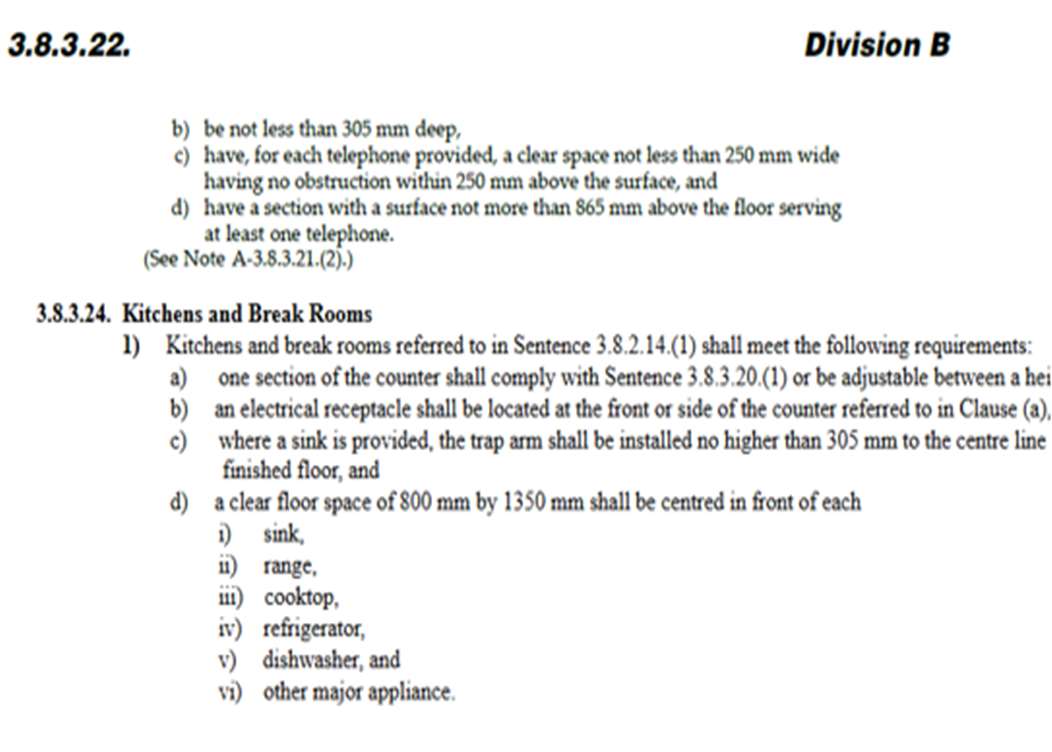
Finally, Sentences, Elements, or even whole Sections can be simply Added through the Regulations – instead of replacing or removing something – they’re simply tacked on as a new element for Code users to make use of. No swapping out, no placeholders – just something completely new added to the “Code” through the Regulations. This is incredibly useful to expand on existing requirements or identify specific items which the Code does not otherwise cover.
For example, office break rooms were not previously covered by barrier-free design in the Code, but their requirements were outlined through an addition in the Regulations. Similarly, we’ve used the regulations to add in requirements for Tiny-Homes, and Seasonal Recreational Cabins (cottages, camps) which the Code itself doesn’t address – but, created value for the Province, because these structures came with a lot of questions; as these were common structures, it made sense to make a new Section just to cover their requirements, and simplify the rules about them across the Province.
Whether Repealed, Altered, or Added – the number of changes made to the adopted Code create a significant enough change, that users should *always* remember to review the Regulations first – before relying on the Code as written, to cover achieving compliance. As we’ve stated – whole sections can exist in the Regulations, that would otherwise not exist in the Building Code; many design firms and architects working in industry operate in a number of different regions – which can make keeping track of which rules are applied where fairly difficult. Having the Regulations as a check-in for requirements that might otherwise not show up in the Code itself, is a valuable tool for both the designer, and Official alike! The Regulations have additional value, outside of these Code edits – which we’ll discuss a little more later in the Module – but remember, before opening your Code book, the Regulations are the best place to start, when it comes to confirming requirements.