1.3 – How do you Become a Building Official?
Become a Building Official? Becoming a Building Official takes a fair bit more than putting on a hard hat and picking up a copy of the Code (though, those are some important steps); it requires a fair bit of experience, lots of training, and a solid understanding of both the group of Codes themselves, and the construction process in general.
This happens through a combination of background knowledge or training, custom Building Code Courses, and mentorship – by other seasoned Building Officials. Obviously, this doesn’t all happen overnight, and Building Officials don’t just dive immediately into complex buildings; there are a number of stages between the first time they crack open a Code book – and inspecting a high-rise. The good news is that no matter where you are in your knowledge of the Codes, there’s an accessible starting point!
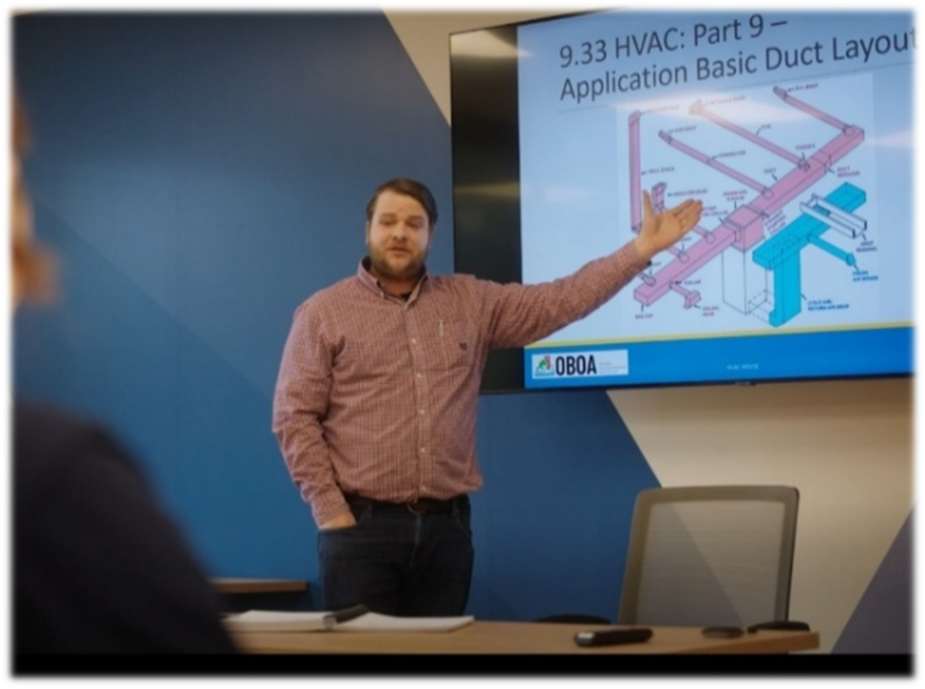
In Nova Scotia, the process typically begins at the Intern level – in some cases referred to as an Assistant Building Official (depending on what area you’re working in). Consider this as a foot in the door to the role as a Building Official – very much a Junior or “in training” position. Members at this stage would be examining single-storey accessory buildings (think garages or sheds), and simple decks, and likely involved in a limited amount of plans review or enforcement. This can include things like posting Orders for small projects where there isn’t an approved permit, or reviewing complaints for things like noise, debris, or other construction violations that are reported by the public.
This provides the Building Official in Training an opportunity to apply some basic skills in Code use, at structures that are lower-stakes (by comparison to larger buildings). It also gives them an opportunity to work on some of the basic interpersonal and conflict skills that can sometimes be necessary in a compliance related job!
At the next stage called the Residential Qualification Level, Officials in training add to their experience in the previous role, taking on further responsibility by adding Single-Family Homes (or dwellings), Duplexes, and Houses with secondary suites. This requires a deeper understanding of Code requirements, where buildings will now be regularly occupied, and introduces them more complex concepts like spatial separations (the requirements for distances between buildings), egress (the path of getting out of a building), and even fire separations (how to slow the spread of fire from one part to another, within a building). While these can seem like some pretty heavy topics at first – it’s important to note that these requirements will be for houses only; this means that while there is some new learning involved, what the Code will be applied to will be a pretty limited group of buildings (but still important to life safety!)
Building (and yes, that’s a pun) on this experience, Officials work towards Qualification Level 1, allowing them to review and inspect all “Small Buildings” as defined by the Code. This introduces them to occupancy groups (or the way a building is used by the people in it).
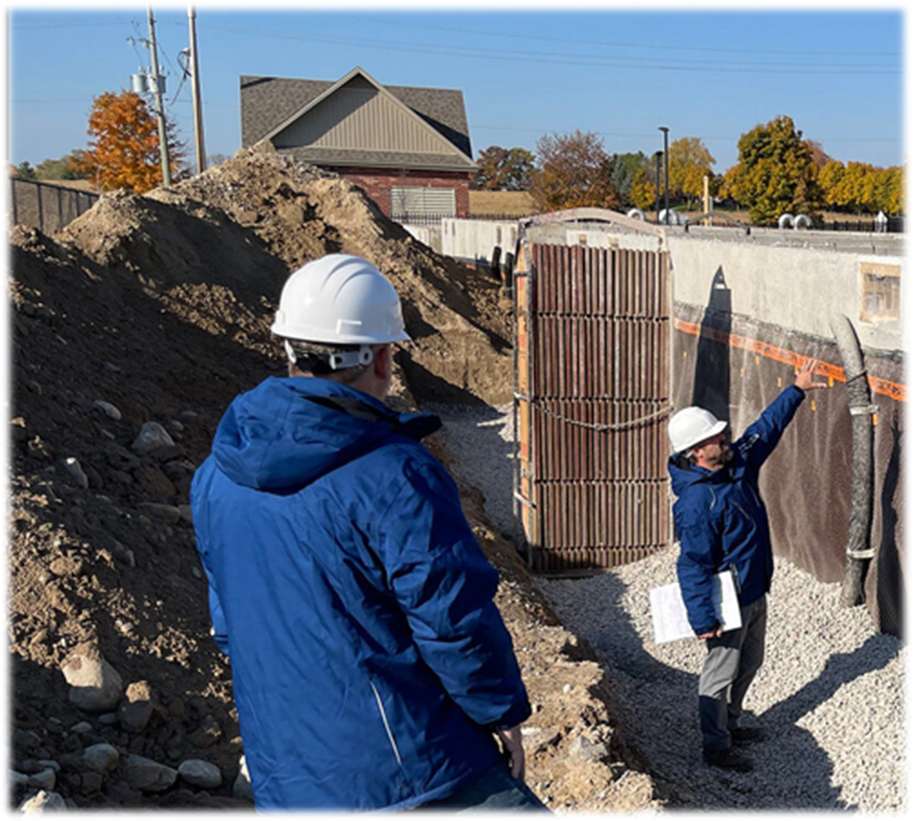
In Nova Scotia, this includes a wide range of uses for the building – whether it be retail, restaurant or food service, offices, residential, or even some types of industrial – like warehouses (if they’re small enough). This can be a pretty big shift from the Residential level – however, a lot of the same principles still exist here; fire separations are still a big part of what the Official does, egress is even more important when dealing with larger groups of people, and our spatial separations now include non-combustible construction, which adds a greater level of difficulty in building design. We’ll talk more about occupancy groups later on – but the key takeaway is learning that different uses come with different Code requirements. It isn’t unusual for an Official to spend a large portion of their career here – or even for this to be where they choose to stay even until retirement; there is a lot of complexity at this level of construction, and for our Province, certainly no shortage of work that the Official can review or be involved in. However, for those that are interested, even more complex buildings remain.
Finally, Officials can work towards their Qualification Level 2, which brings all buildings under their scope – whether we’re looking at single-storey Starbucks, or a seventeen-storey Skyscraper; that’s an incredibly wide range of construction – and means that regardless of the use, there are requirements that the Official needs to be aware of. Naturally, this level requires the most amount of training and experience, as it covers the most complicated buildings able to be constructed, but at this level – the Building Official can DeCode just about anything!
Beyond this – there is a further level (not one that every Official may choose to pursue, but still important for us to acknowledge), called Certification; these can be achieved both at the Provincial level (say, Nova Scotia, for example), but also Nationally or Canada wide. While Certification does not add any further level of Building Code scope to the Official – it does signify a level of capability and experience, that are recognized in every jurisdiction.